Remove Vinyl From a Shirt: Iron, Hair Dryer or Alcohol
Remove heat transfer vinyl with an iron, a hair dryer or rubbing alcohol: the right method per print, and the mistakes that ruin fabric.
By Gaël Pons
Published
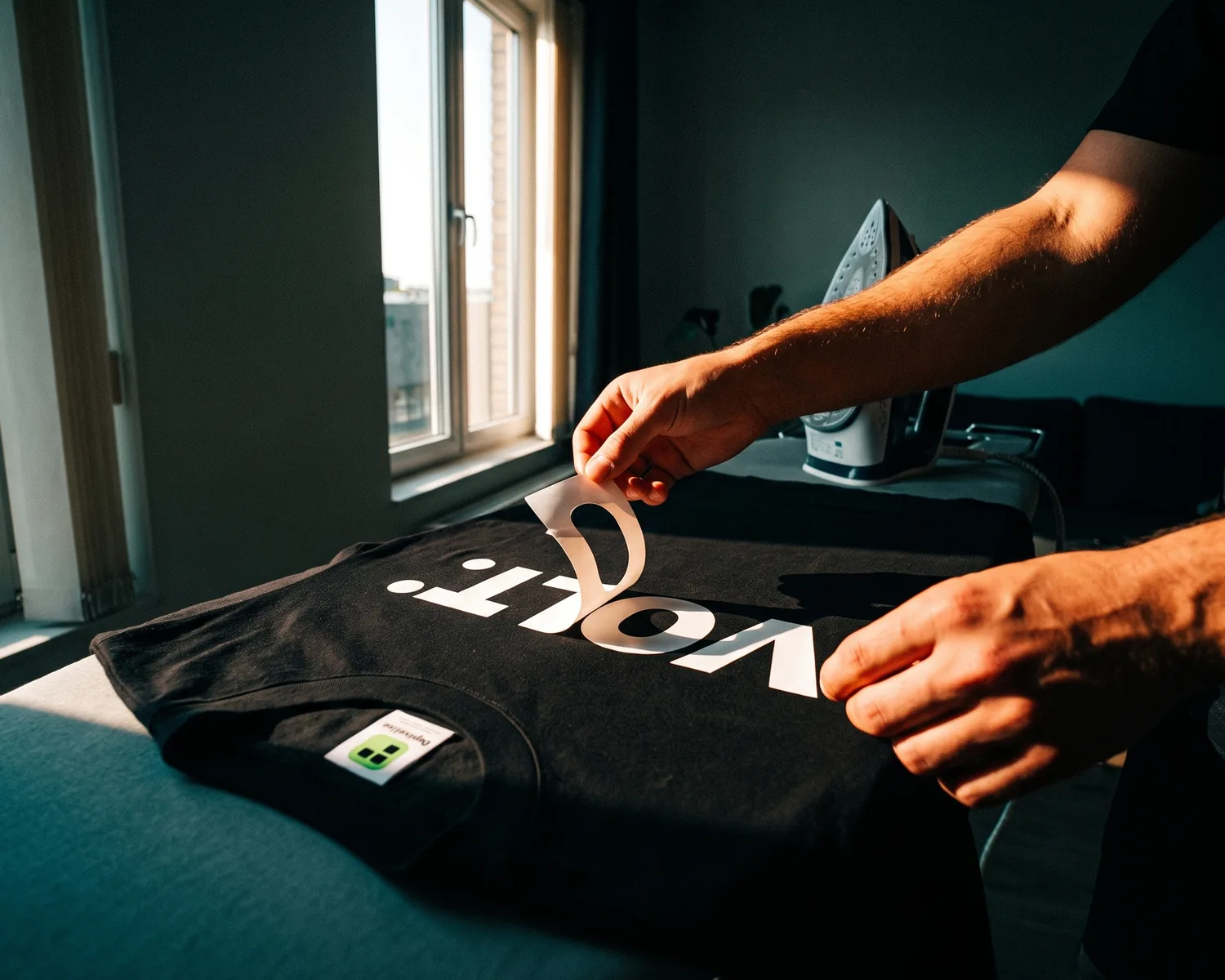
To remove vinyl from a shirt, heat it until the glue softens, ideally with an iron pressed on the inside of the shirt, then peel the vinyl off with tweezers while it’s still warm. Rubbing alcohol takes care of the sticky residue left behind.
What kind of print is on your shirt?
The print on a shirt is usually one of four kinds: heat transfer vinyl, flock, screen print or DTF, or embroidery, and only vinyl and flock come off cleanly with heat. Look at it and feel it before you pick a method:
| The print | What it looks and feels like | What works |
|---|---|---|
| Heat transfer vinyl (HTV, iron-on) | Smooth, slightly plastic film with a crisp edge | Heat, then alcohol on the glue |
| Flock | Soft, velvety, a little raised | Heat, working slowly |
| Screen print or DTF transfer | Thin ink that sits in the fibers | Barely removable: cover it instead |
| Embroidery | Stitched thread, visible inside | Seam ripper, never heat |
If a fingernail can lift a corner, that’s good news: there’s a layer of glue to soften.
How do you remove vinyl from a shirt with an iron?
Removing vinyl from a shirt with an iron means reheating the glue that holds it, then peeling while it’s hot. Turning the shirt inside out first is the gentlest way to do it, because the heat reaches the glue before it reaches the vinyl’s face.
- Turn the shirt inside out on the ironing board, vinyl side down, or leave it right side out with a sheet of parchment paper on top. From the inside, the heat reaches the glue without melting the vinyl onto your iron.
- Use a hot, dry iron (no steam) and press a small area for a few seconds without sliding it around.
- Lift a corner with tweezers while it’s warm and pull slowly, close to the fabric, reheating as you go.
- If it fights back, don’t yank it: add heat. Vinyl tearing into tiny bits means the glue has cooled down.
If you have a heat press, the same logic applies: press the shirt inside out for a few seconds, then peel.
Can you remove vinyl without an iron?
Yes, a hair dryer on its hottest setting, held a few inches away, softens the glue too. It’s slower than an iron but kinder to performance fabrics, and a heat gun does the same job faster if you keep it moving so the fabric doesn’t scorch.
How do you get the glue residue off?
Vinyl glue residue comes off with a cloth soaked in rubbing alcohol (isopropyl alcohol), rubbed in small circles. A citrus-based adhesive remover works too. Test any product on an inside seam first, since some dyes bleed, then wash the shirt at the warmest temperature its care label allows.
What mistakes ruin the shirt?
The three mistakes that ruin a shirt while removing vinyl are scraping it cold, using acetone on synthetics, and fighting an ink print.
- Scraping it cold with a blade or a knife: the fibers come off with the vinyl, and that hole is there for good.
- Pure acetone on polyester: it attacks the fabric itself, not just the glue. Nail polish remover often contains it, so check the label.
- Trying to strip a screen print or DTF: the ink is in the fibers. The realistic fix is a new print on top, bigger or darker.
How hot can you go on polyester and work wear?
The heat a shirt can take is printed on its care label: the dots on the iron symbol are standardized, one dot for about 230°F (110°C), two for about 300°F (150°C), three for about 390°F (200°C). Polo shirts, softshells and jackets from work uniforms are often polyester, rated one or two dots. At one dot, switch to the hair dryer. On a puffer jacket or a waterproof shell, stop: heat would also unglue the inner layers.
When a whole team changes logos, having the old print covered by the new one is often cheaper than stripping every piece: ask your print shop for a quote before you start.
How do you get the logo redone anywhere you like?
Getting a clean new print starts with your logo as a vector file, meaning the logo is drawn as shapes instead of a mosaic of tiny colored squares (here’s what a vector image is, in plain words). It’s the file print shops, embroiderers and cutting machines handle best. Vinyl often comes off precisely because the logo changed, or because the old shop kept the only good copy.
On Depixelise, you drop in whatever logo you have (a PNG, JPG, WebP or SVG of 10 MB or less) and see the vectorized result full size on screen. The pack lands in your inbox, 100% free, no sign-up, no watermark: the logo as an SVG, a transparent PNG 2000 px wide, a one-color variant and a reversed variant made for dark shirts. Those files are yours, with no usage strings attached: send them to the local print shop, an online store, your club’s embroiderer, or cut the vinyl yourself. If your only copy is a small JPG, see how to vectorize an image and what to check before you send it. And if the next version should be stitched rather than pressed, read about embroidered t-shirts.
FAQ
Can you fix an iron-on you just put on crooked?
Yes, a crooked iron-on is easiest to fix right away: press it again from the inside while it’s still warm, peel it, and cut a new piece. Reusing the same vinyl rarely works, because the glue is spent and picks up lint.
Will removing vinyl leave a mark on the shirt?
Removing vinyl often leaves a mark: a slightly darker or shinier ghost where the print was, because that patch saw less light and fewer washes. It fades over the next washes, and a new print in the same spot hides it completely.
Can you remove just one letter from a jersey?
Yes, a single letter or number comes off on its own if you heat only that area with the tip of the iron, with parchment paper shielding the letters next to it. That’s how you fix a misspelled name on a team jersey.
Does white vinegar remove vinyl?
Hot white vinegar can help loosen vinyl glue: soak a cloth, lay it on the print for a few minutes, then lift a corner. It’s gentler than solvents but slower, and works best alternated with heat.
Can embroidery be removed like vinyl?
No, embroidery comes out with a seam ripper, stitch by stitch from the inside, never with heat or solvents. Small needle holes remain, and on most fabrics they fade after a few washes.