Custom Embroidered T-Shirt: Fabric, Logo Size, File
Planning a custom embroidered t-shirt? Which fabric holds stitches, how big the logo should be, how many thread colors, and what file to send.
By Gaël Pons
Published , updated
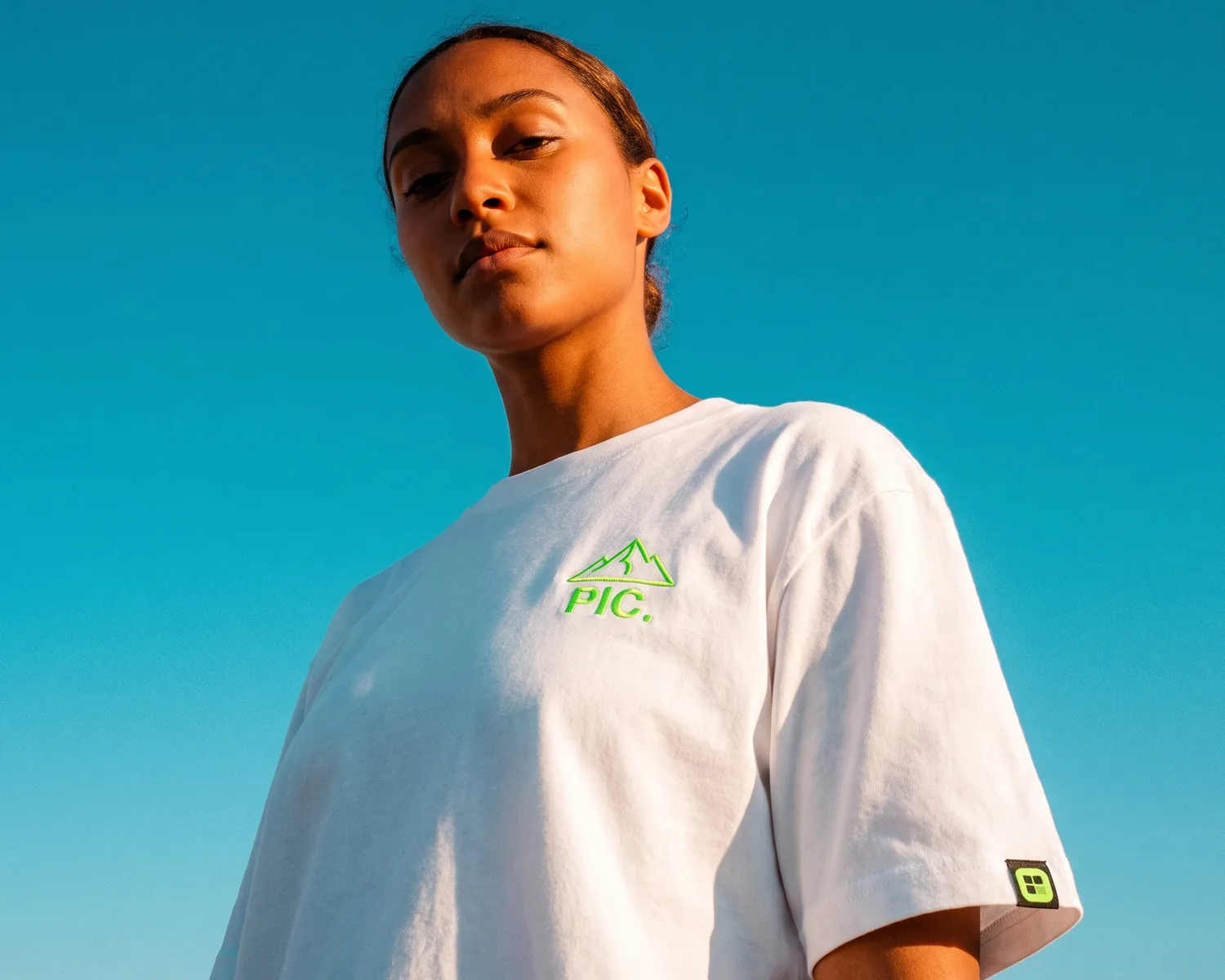
A custom embroidered t-shirt has your logo sewn in thread instead of printed in ink, so the design has texture and lasts as long as the shirt. It works when three things line up: a fabric heavy enough to hold stitches, a small logo on the left chest, and a clean file for your embroiderer.
What is a custom embroidered t-shirt?
A custom embroidered t-shirt is a tee on which a machine stitches your logo, point by point, with colored thread. Ink sits on top of the fabric; thread goes through it, so embroidery doesn’t crack or peel in the wash. The look is closer to branded apparel than to a printed tee: quieter, slightly raised, with the sheen of the thread.
Can you embroider a thin t-shirt?
You can embroider a thin t-shirt, but only with a small, light design, because every stitch pulls on the knit. A lightweight jersey puckers under a big filled area, while a heavyweight tee (check the fabric weight on the product page) handles almost anything. Bernina’s embroidery tips say the same thing: large, dense designs need a firmer fabric or more stabilizer, because they pull on the fabric more than open designs.
On a thin shirt, ask the shop for a stabilizer behind the design. It keeps the fabric steady while the machine sews and reduces the ripple around the logo after a few washes. Thicker garments, like the ones in our guide to a custom embroidered jacket, are far more forgiving.
What size should an embroidered logo be on a t-shirt?
An embroidered logo on a t-shirt usually sits on the left chest, where Shopify’s logo placement guide recommends 2.5 by 2.5 inches up to 5 by 5 inches; for embroidery, stay toward the small end. A larger centered design is possible on a heavyweight tee, as long as the fill is kept light.
Text size matters as much as logo size: for a simple font like Verdana, Hatch Embroidery, a maker of embroidery software, sets the minimum at about a quarter inch tall. Shorter letters tend to fill in. On a small design, keep the symbol and drop the tagline.
For a printed design rather than embroidery, t-shirt design sizes in inches and pixels covers every print area, from the left chest to a full back.
Where should the embroidery go on a t-shirt?
The most common spot for t-shirt embroidery is the left chest, because it suits every shirt size and every logo. Next come the sleeve (a symbol or a short word), the back of the neck just below the collar, and the lower hem for a subtle mark. A full embroidered back is rare on a tee: it weighs the jersey down and adds a lot of stitches to the price.
To see where your logo lands before you order, put it on the left chest or the back of the neck of a t-shirt in our free mockup generator. You’ll judge the position, the scale and how the colors stand out on the shirt; the stitched relief won’t show in a flat image.
How many thread colors can you use?
A logo embroidered on a t-shirt looks best with a few solid colors, because each color means a thread change and fine shading doesn’t reproduce in thread. Gradients turn into flat areas, drop shadows disappear, and thin outlines need to be thickened or removed. If your logo has a lot going on, a simplified version for embroidery is normal, not a failure.
What file should you send to your embroiderer?
For a custom embroidered t-shirt, your embroiderer needs a vector file, meaning artwork described by outlines instead of a grid of pixels, usually SVG, PDF or EPS. From those shapes, they build the stitch program the machine reads; a blurry JPG means redrawing everything first, often at your cost. If the word “vector” is new to you, here is what a vector image actually is.
Check the background too. A logo saved on a white rectangle causes trouble the moment the shirt is dark, and the embroiderer has to guess which parts belong to the design.
Getting a stitch-ready logo with no background
On Depixelise, the background of your logo is removed automatically during the conversion. You get an SVG where only the logo exists, with no white box around it, which is exactly what an embroiderer wants for a black or navy tee. Nothing to pay (it’s 100% free), nothing to sign up for, nothing stamped on the file: drop in a PNG, JPG, WebP or SVG of up to 10 MB and look at the converted logo full size on screen. For the full walkthrough, see how to vectorize an image.
Embroidery or printing on a t-shirt?
Embroidery suits a t-shirt you keep and wear often (team shirts, staff uniforms, a brand piece), while printing suits a large, colorful graphic or a one-time event. Embroidery costs more on small runs, because the stitch program is prepared once before the first shirt. Small, patch-style designs are another option, covered in our guide to custom embroidered patches.
FAQ
What is the minimum order for an embroidered t-shirt?
Many shops will embroider a single t-shirt, but the setup of the stitch program is charged from the first piece. The price per shirt drops noticeably as the order grows.
Does an embroidered t-shirt feel scratchy?
The back of an embroidery can feel a little rough on a shirt worn against the skin. Some shops add a soft backing over the inside of the design: ask for it if comfort matters.
How do you wash an embroidered t-shirt?
Wash an embroidered t-shirt inside out at a moderate temperature, and iron it from the inside, never directly on the stitches. The thread handles the washing machine fine; it’s a hot iron pressed on the raised design that flattens it.
Can you embroider a polyester t-shirt?
Yes, a polyester t-shirt can be embroidered just like a cotton one, including lightweight performance shirts. As with any thin knit, keep the design small and light.