Custom Embroidered Hats: Style, Logo Size and the Right File
Custom embroidered hats with your logo: which cap style to pick, embroidery vs print, how big the logo can be, and which file the shop needs.
By Gaël Pons
Published
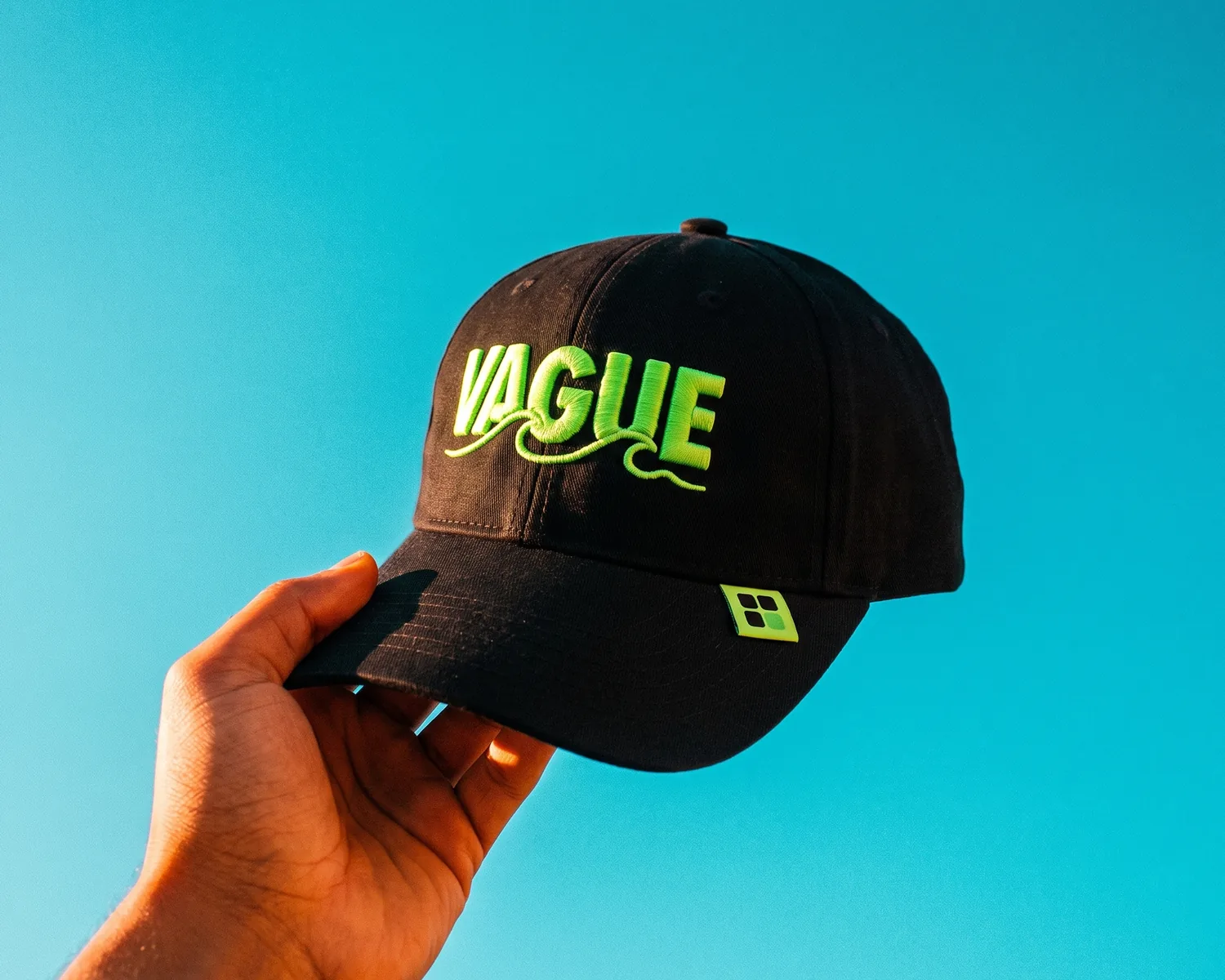
Custom embroidered hats come down to three choices: a cap with a firm, tall front panel, embroidery as the decoration method, and a stripped-down version of your logo. The stitch area is small and curved, so the logo has to adapt to the hat, never the other way around.
Which hat style works best for custom embroidered hats?
The best style for custom embroidered hats is one with a structured, high front panel, because the stitches sit flat and stay crisp. These are the four families most shops offer:
| Style | Look | What it means for your logo |
|---|---|---|
| Baseball cap (dad hat) | Classic, from teams to offices | Soft or structured front, check the exact model |
| Snapback | Flat bill, streetwear feel | Tall, stiff front, the easiest canvas to stitch |
| Trucker hat | Mesh back, summer vibe | Only the fabric or foam front takes embroidery |
| Bucket hat | No bill, brim all around | Narrow area, small logo or side placement |
A low-profile cap has a shorter crown: your logo will need to be even more compact.
Embroidery or printing: which one for custom hats with a logo?
For custom hats with a logo, embroidery is the go-to method, because thread follows the curve of the panel and holds up to sweat, rain and sun. Printing and heat transfers exist, but a heat-pressed film struggles on a curved front with a seam running through it. They make sense only for a very detailed design, which is rare on a hat.
A sewn-on patch is a third route, handy when your logo needs a background shape: see our guide to custom embroidered patches.
How big can a logo be on an embroidered hat?
A logo on an embroidered hat fits in an area roughly as tall as a credit card, a bit wider than it is high, centered above the bill. Every shop publishes its own template depending on the cap: ask for it before you prepare the file, especially for a low-profile hat.
The practical consequence: a long, wide logo (a full company name, for example) ends up tiny in height once it fits the width. A square or round logo uses the space much better.
How do you adapt a logo for the front of a cap?
Adapting a logo for a cap means keeping what stays readable when small and dropping the rest. A quick test: display your logo on screen at the real size of the stitch area and look at it from across the room.
- The symbol on its own: if your logo pairs an icon with a name, the icon often carries the front by itself; the name can go on the side or the back.
- Small text: a tagline, a founding year or a web address turns into a blur of thread. Remove it rather than shrinking it.
- Gradients and shadows: embroidery can’t reproduce them; they turn into bands of solid color.
- Background boxes: on a hat, the shop stitches the shapes, not the rectangle behind them.
The general thread rules (how many colors, how thin a line can be, how the stitch file gets made) apply to every garment and are covered in our logo embroidery guide.
What file does the shop need for embroidered hats?
The file an embroidery shop needs for hats is a vector file, meaning your logo described as shapes instead of little colored squares, ideally an SVG or a vector PDF. The shop uses it to build the stitch program the machine follows: the cleaner the shapes, the more faithful the embroidery. If you’re unsure which format to send, our page on the vector file walks through SVG, PDF and EPS.
Ordering black or navy caps? Bring a light version of your logo too, as explained in white logo on a dark background.
A one-color logo, ready for thread
Plenty of caps are stitched in a single thread color: white on black, black on khaki, tone on tone. On Depixelise, that one-color version comes with every conversion, alongside the SVG, a transparent PNG and a negative version, so nobody has to redraw it by hand. You upload a file up to 10 MB (PNG, JPG, WebP or SVG), see the result right there on screen, and you never pay: the converter is 100% free, skips the sign-up step and leaves your logo unmarked. Zoom in on the one-color file before ordering: if your logo used two close shades, some text can merge into the background, which is your cue to simplify first.
How many hats should you order?
You can order as few as one custom hat from many embroidery shops, but the price per piece drops as quantity goes up, because setting up the stitch program is shared across the batch. For a club or a small team, group everyone’s order into one run instead of buying a few here and there.
FAQ
Can you embroider the side or back of a hat?
Yes, most shops can also embroider the left or right side and the back of a hat, just above the strap. Those areas are even smaller than the front, so they suit a first name, a year or a small icon.
What is 3D puff embroidery on a hat?
3D puff embroidery slips a layer of foam under the thread to make the logo stand out in relief. It works best on bold letters and simple shapes; fine details get lost.
How do you clean an embroidered hat?
An embroidered hat is best washed by hand in lukewarm water, without wringing, then air-dried over a rounded shape. A washing machine mostly risks bending the bill and crushing the front panel.
Snapback or trucker hat for a team?
For a team, a snapback is the safer pick: its taller, firmer front makes the embroidered logo come out sharper. A trucker hat is lighter and cooler for summer thanks to the mesh; just check the front panel is big enough for your logo.
Do I need a different file for each hat color?
No, one vector file is enough: the shop picks the thread color to match each cap. Just tell them which thread color you want on which hat color.